

Civil litigation is a structured process for resolving a legal dispute through a court. Although the details vary by jurisdiction and case type, most lawsuits move through recognizable stages: the claim is filed, the responding party has an opportunity to answer, the issues are organized, evidence is exchanged, and the dispute may end through settlement, a court ruling, trial, or appeal.
The sequence is not a promise that every case will reach a courtroom. In the federal courts, the U.S. Courts overview of civil cases explains that settlement, mediation, and other forms of alternative dispute resolution can resolve a case before trial. The practical importance of understanding the stages is that each one creates different deadlines, decisions, and possible outcomes.
The basic path of a civil case
| Stage | Main procedural purpose | Possible endpoint |
|---|---|---|
| Starting the action | State the legal claims, factual basis, jurisdiction, and requested relief | Service on the defendant and a response, or a challenge to the complaint |
| Case management | Set deadlines, identify disputed issues, and organize discovery and motion practice | A scheduling order or other case-management directions |
| Discovery | Exchange relevant, nonprivileged information and develop evidence | Settlement, narrowed issues, or preparation for a dispositive motion or trial |
| Pretrial resolution | Ask the court to decide legal or factual issues, or negotiate a resolution | Dismissal, summary judgment, settlement, or a trial limited to remaining issues |
| Trial and judgment | Present admissible evidence and obtain a decision | Verdict or bench decision followed by an entered judgment |
| Review and enforcement | Seek appellate review where permitted and pursue the relief awarded | Affirmance, reversal, modification, remand, or enforcement of judgment |
This is a map, not a universal timetable. Courts can combine stages, set different deadlines, or end a case early. A lawsuit can also involve counterclaims, third-party claims, temporary orders, or other procedures that do not appear in this simplified outline.
1. Filing the complaint and establishing the dispute
A civil action generally begins when the plaintiff files a complaint or comparable initiating document. The complaint identifies the parties, describes the legal claims and supporting facts, explains why the court has authority to hear the dispute, and states the remedy requested. The requested relief may include money damages, an injunction, a declaration of rights, or another remedy recognized by the applicable law.
Filing alone usually does not complete the opening stage. The defendant must receive formal notice through service of process, unless a valid alternative method applies. Service rules are technical and jurisdiction-specific; an error can affect the deadline for responding or the court’s ability to proceed against a party.
After service, the defendant may file an answer, assert defenses or counterclaims, or submit a motion challenging the complaint. A motion to dismiss may argue, for example, that the complaint does not state a legally sufficient claim or that the court lacks jurisdiction. If a defendant does not respond within the applicable period, the plaintiff may seek entry of default and, where authorized, a default judgment. The result and procedure depend on the governing rules and the court’s orders.
2. Case management turns allegations into a workable schedule
Once the pleadings are underway, the court generally organizes the case through conferences, orders, or both. The court may set deadlines for amendments, initial disclosures, discovery, expert materials, dispositive motions, settlement discussions, and trial. These deadlines are more than administrative markers: missing one can limit the evidence or arguments a party may later use.
In federal court, Federal Rule of Civil Procedure 16 gives the court a framework for scheduling and pretrial management. The parties may be required to discuss the claims and defenses, identify information that must be preserved, propose a discovery plan, and consider whether early resolution is possible.
At this point, the parties often refine the real questions in dispute. A complaint may contain several theories of liability, while the scheduling process can reveal that only a few factual issues will determine the outcome. The case becomes less about the general story and more about what must be proved under the legal elements of each claim.
3. Discovery: testing the evidence

Discovery is the pretrial information-gathering stage. Depending on the rules and the court’s order, it may include written questions called interrogatories, requests for documents and electronically stored information, requests for admission, inspections, and depositions in which witnesses answer questions under oath.
Discovery is broad but not unlimited. Under Federal Rule of Civil Procedure 26, the federal standard generally focuses on information that is relevant to a claim or defense and proportional to the needs of the case, while protecting privileged material and allowing limits through court order. Information can be discoverable even if it may not ultimately be admissible at trial.
The distinction matters. Discovery helps parties find out what evidence exists, who has it, and how the opposing side frames the facts. Trial evidence, by contrast, must satisfy the rules governing admissibility. A document may be exchanged during discovery without being admitted into evidence later.
Discovery can also produce disputes. A party may object to a request, seek a protective order, or ask the court to compel a response. Preservation duties can arise before or during the lawsuit, especially when relevant electronic information may otherwise be lost. The scope and timing of these duties depend on the case and applicable law.
4. Motions can narrow or end the case before trial
Parties may ask the court to resolve particular issues before trial through motions. Some motions address procedure, such as the location of the case, the sufficiency of pleadings, discovery disputes, or the admissibility of proposed evidence. Others seek a decision on the merits.
Summary judgment is the most familiar merits-based pretrial motion. Under Federal Rule of Civil Procedure 56, the court may grant it when there is no genuine dispute about a material fact and the moving party is entitled to judgment as a matter of law. A court may decide the entire case or only particular claims, defenses, or factual issues.
Summary judgment does not ask the judge to choose between competing witness accounts in the way a trial may. The court evaluates the record under the applicable legal standard and determines whether a legally meaningful factual dispute requires a trial. If material disputes remain, the case proceeds on those issues; if not, some or all of the case may end without a trial.
5. Settlement is a separate route to resolution

Settlement discussions can occur before a lawsuit is filed, during discovery, after a motion, or even during trial. The parties may negotiate directly, use attorneys or other representatives, or participate in mediation. A mediator facilitates discussion but generally does not decide who wins.
A settlement agreement can include payment, dismissal of claims, confidentiality terms, changes in conduct, releases, or other agreed obligations. Its legal effect depends on the language of the agreement and the rules governing the case. Some settlements require court approval, particularly in specialized proceedings.
Settlement does not mean the court has made a finding on the merits. It means the parties have chosen contractual terms to resolve the dispute. The consequences for future claims, taxes, confidentiality, and enforcement should be reviewed under the relevant law before an agreement is finalized.
Readers following litigation developments will see that procedural events can matter even when no trial date is imminent. At the case level, however, a news report cannot replace the docket, the court’s orders, or the actual settlement terms governing a particular dispute.
6. Trial: presenting the case to the decision-maker

If unresolved issues remain, the case may proceed to trial. A civil trial may be a jury trial or a bench trial decided by a judge, depending on the claims, the relief requested, the parties’ rights, and whether a jury demand was properly made.
Trial commonly includes jury selection where applicable, opening statements, testimony, documentary or physical exhibits, objections and rulings, closing arguments, and instructions on the law. The party bringing the claim generally has the burden of proving the required elements, although the burden and standard can vary by claim and jurisdiction.
In many ordinary civil cases, the plaintiff must establish the claim by a preponderance of the evidence, meaning the fact is more likely than not. Other claims or remedies can use a different standard. The judge controls legal issues and courtroom procedure; a jury, where present, decides the factual questions assigned to it under the instructions.
7. Judgment makes the result formal
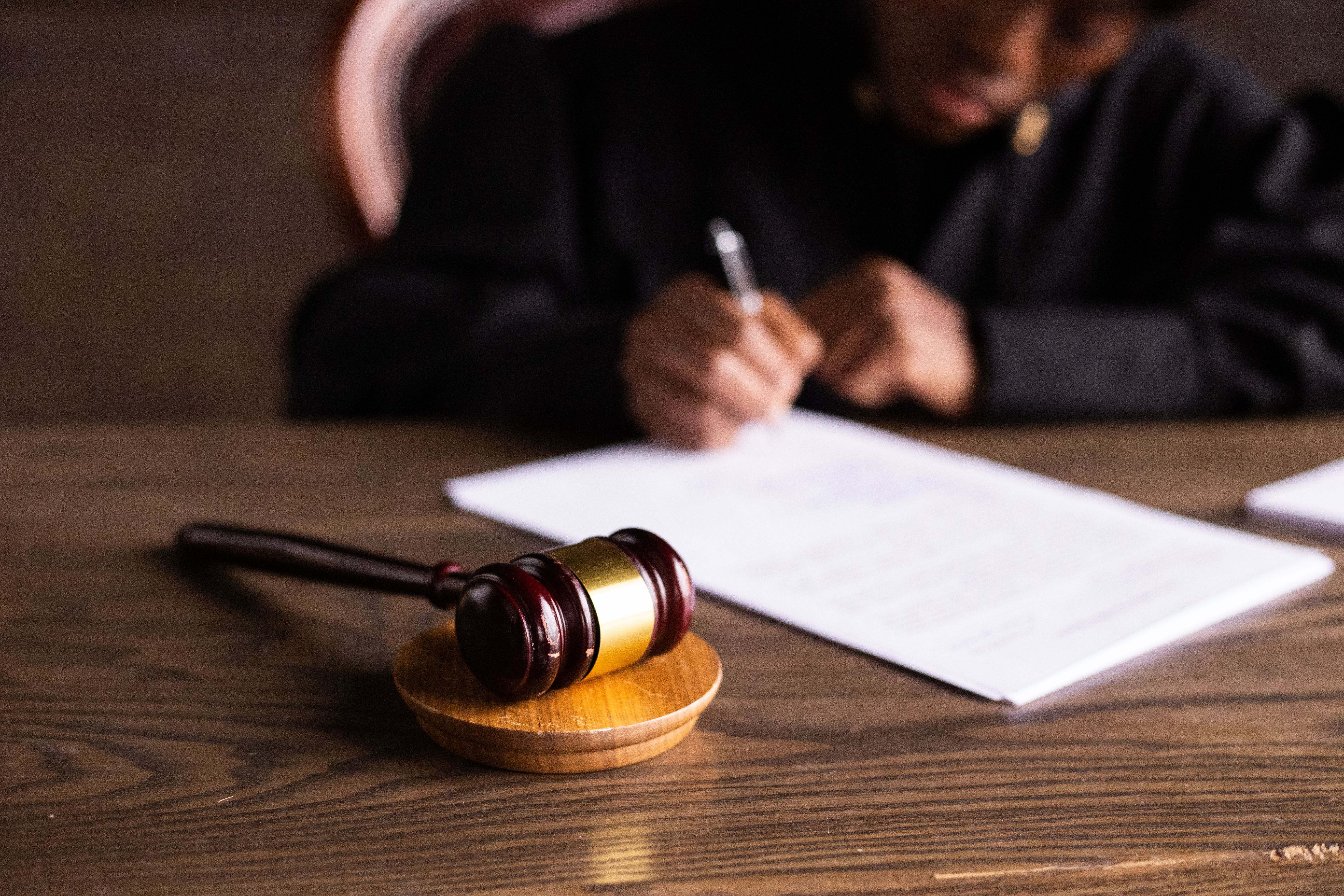
A verdict or judicial decision is followed by a formal judgment or order stating the result and the relief awarded. Relief may include damages, an injunction, a declaration, costs, or another remedy. In federal practice, Rule 58 addresses entry of judgment, including the use of a separate judgment document in the circumstances covered by the rule.
Judgment is not always the same as payment or practical compliance. A successful party may need to take additional steps to enforce the judgment, subject to exemptions, stays, collection rules, and any appeal. Conversely, a judgment may be stayed while post-trial motions or appellate proceedings are pending.
8. Appeal and post-judgment proceedings
An appeal asks a higher court to review specified legal or procedural issues. It is generally not a complete retrial with new evidence. Appellate review commonly relies on the record made in the trial court, the parties’ written briefs, and oral argument where scheduled.
Deadlines are strict and vary by jurisdiction, case type, and the order being challenged. In federal civil cases, the notice-of-appeal period is commonly 30 days after entry of judgment, with different rules for cases involving the United States and for certain post-judgment motions. A party should verify the precise deadline in the applicable rules and court order rather than relying on a general summary.
An appellate court may affirm, reverse, modify, dismiss, or send the case back to the trial court for further proceedings. Even when a party wins an appeal, the trial court may need to implement the appellate decision. Some disputes therefore continue after the first judgment, although the issues and available remedies may be narrower.
Questions readers often ask
Does every civil lawsuit go to trial?
No. A case may end through dismissal, default, summary judgment, settlement, or another court-approved resolution before trial. A trial occurs only if the dispute remains unresolved and the court schedules one.
How long does civil litigation take?
There is no single reliable timeline. Duration depends on jurisdiction, complexity, discovery volume, motions, court availability, settlement discussions, and whether an appeal follows. A court’s scheduling order is a better guide for a specific case than a general estimate.
What is the difference between a motion to dismiss and summary judgment?
A motion to dismiss generally tests the legal sufficiency of the pleadings at an early stage, often assuming the well-pleaded factual allegations are true for purposes of the motion. Summary judgment ordinarily relies on evidence developed in the record and asks whether a genuine dispute of material fact requires trial.
Can parties settle after a trial begins?
Yes. Parties may continue settlement discussions during trial, although the practical and legal considerations change as evidence is presented and the court’s schedule advances. Any agreement should be documented and completed according to the applicable procedure.
What happens if a party does not comply with discovery?
The other party may attempt to resolve the issue, seek an order compelling a response, request a protective order, or ask for another remedy authorized by the rules. Consequences depend on the nature of the failure, the court’s order, prejudice, and the governing procedural law.
The key idea: litigation is a sequence of decision points
Civil litigation is easier to understand when viewed as a series of decision points rather than a straight march toward trial. The complaint defines the dispute, case management sets its boundaries, discovery tests the evidence, motions clarify what the court can decide early, and settlement remains available throughout. If the case reaches trial, the judgment records the result; if a permitted appeal follows, the reviewing court examines the issues preserved in the record.
Because local rules and substantive law can change the details, general explanations are a starting point rather than case-specific legal advice. The most useful next step in an actual lawsuit is to identify the governing jurisdiction, read the court’s orders carefully, and track every applicable deadline.